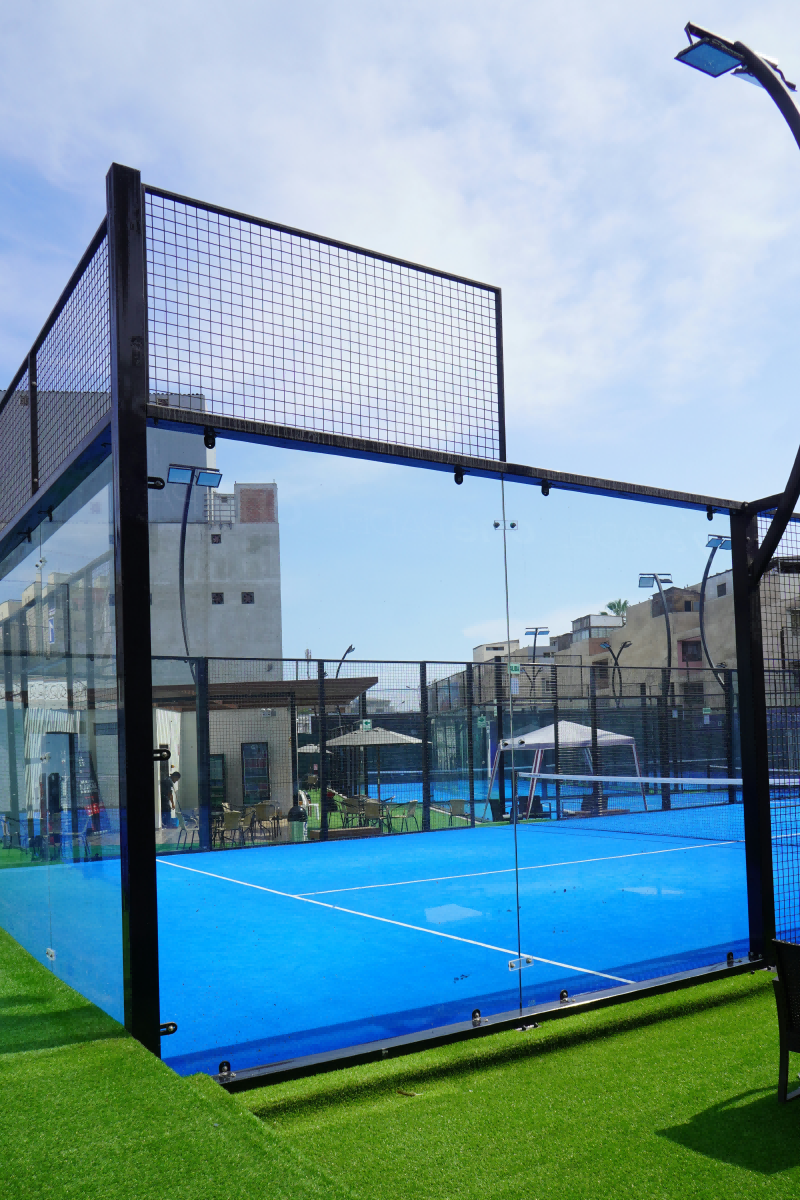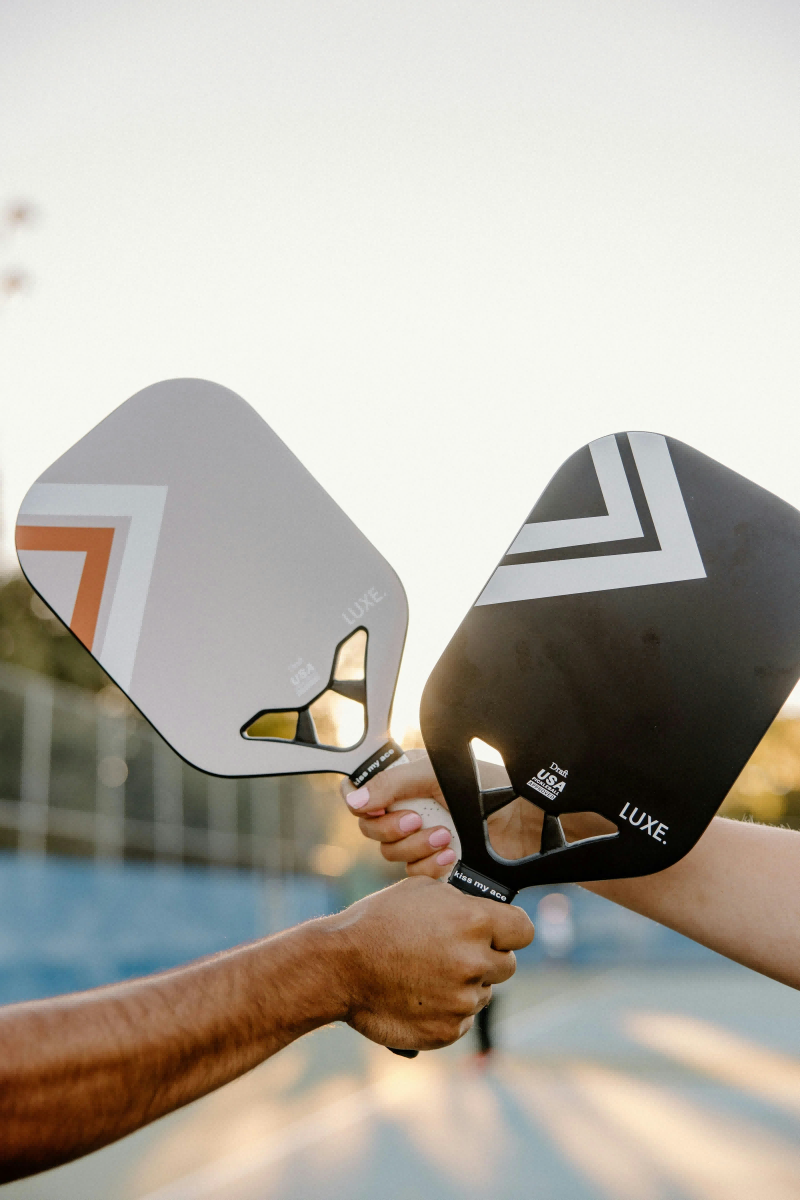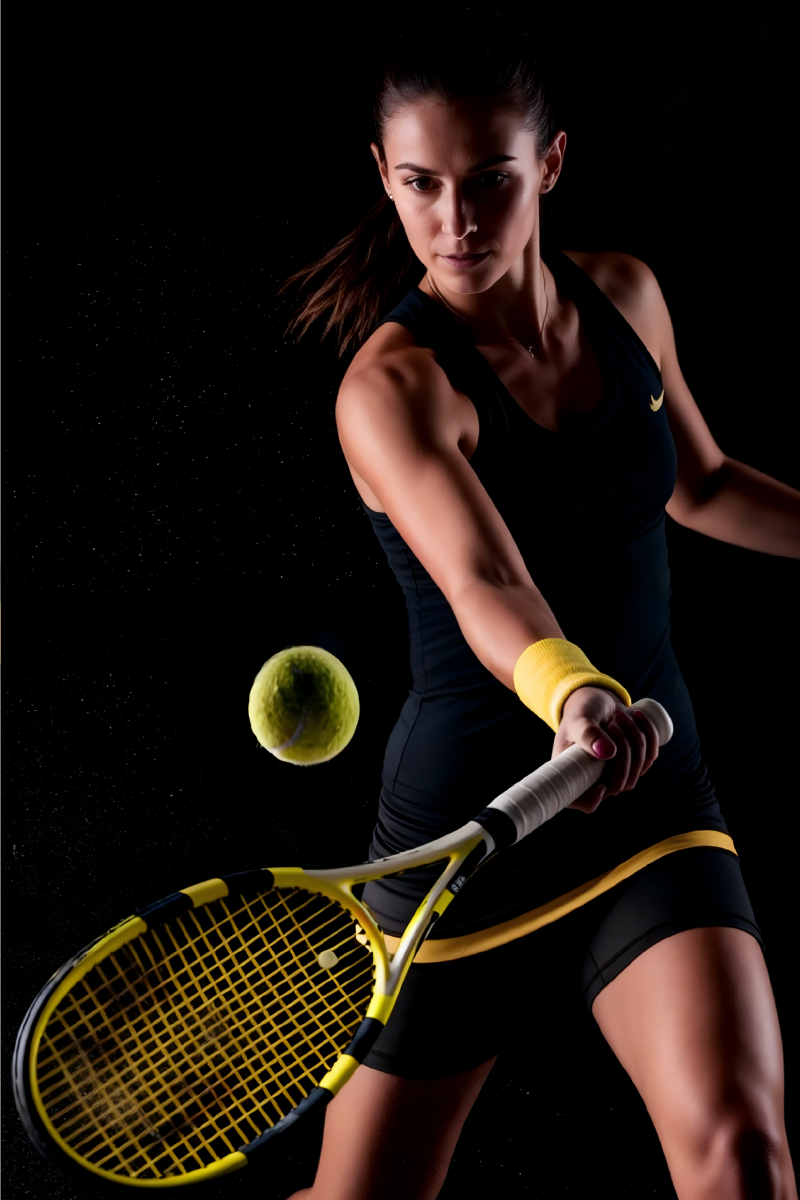
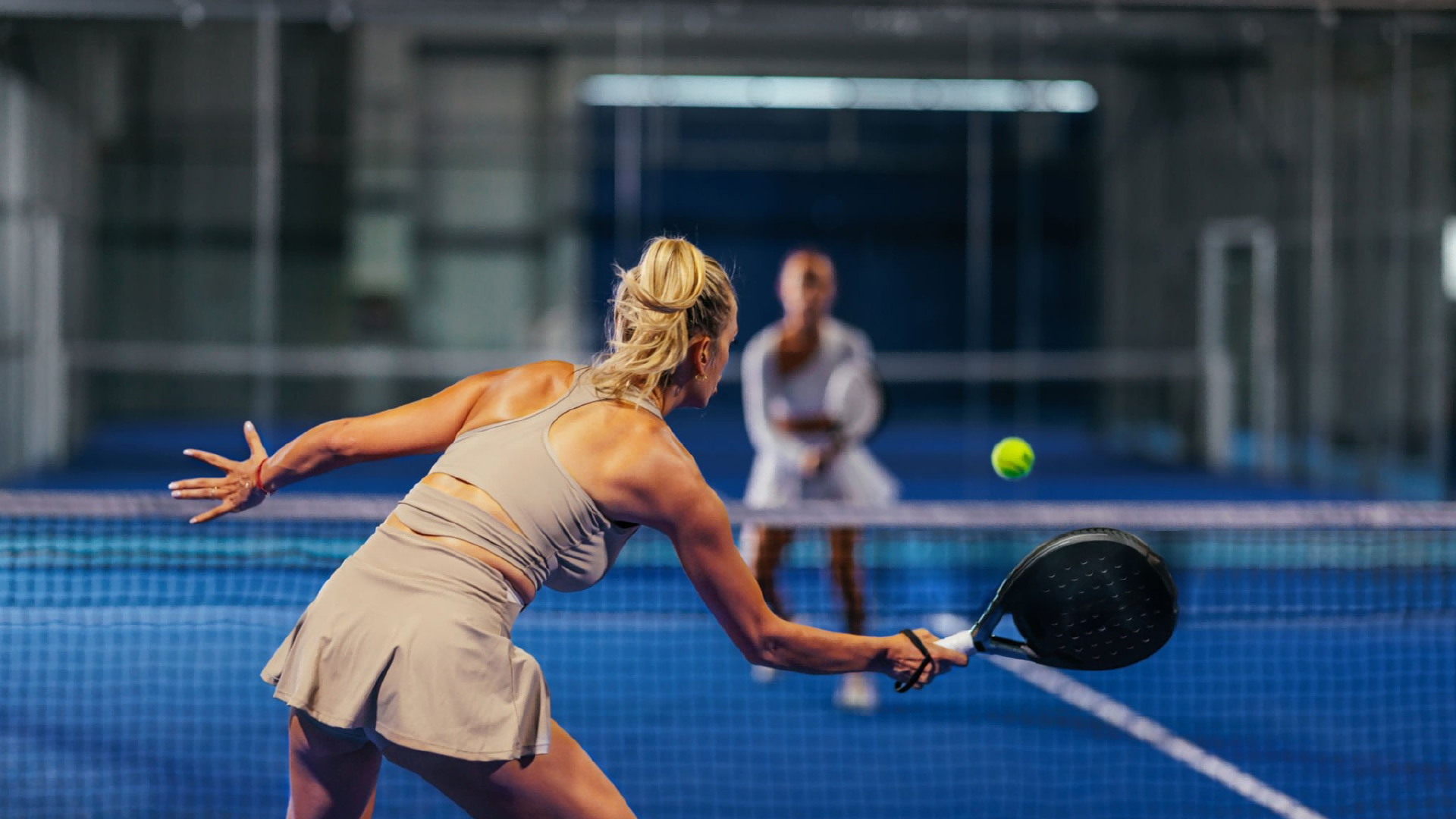
Padel is a fast-paced, social racquet sport combining elements of tennis and squash, typically played as doubles on an enclosed 20x10 meter glass-and-mesh court. Originating in Mexico in 1969, it uses solid, stringless rackets and a low-pressure tennis ball. The game is known for being easy to learn, with walls actively used during play.

A standard regulation padel court, as defined by the International Padel Federation (FIP), is a rectangle measuring 20 meters (65.6 ft) long and 10 meters (32.8 ft) wide. The total, enclosed playing area covers 200 square meters. The court is divided by a net and surrounded by glass walls and mesh fencing, with a minimum ceiling height of 6 meters for indoor courts.

667
| Class | Ehor Ave lux PA | U2 hor PA | Ehor Ave lux TA | U2 hor TA | GR max | Ra |
| Class I | 500lx | 0.7 | 75% PA | 75% PA | 50 | >70 |
| Class II | 300lx | 0.7 | 75% PA | 75% PA | 50 | >60 |
| Class III | 200lx | 0.6 | 75% PA | 75% PA | 55 | >60 |
Padel court lighting poles are typically installed at a minimum height of 6 meters, with 8 meters recommended to avoid glare. The standard configuration uses four poles, each with two LED floodlights, positioned 1 meter outside the side walls, aligned with the service line.
Key Lighting Pole Locations & Specifications:
Positioning: Four poles are placed on the long sides of the court (two on each side), typically 1 meter outside the 10-meter side wall and aligned with the service line (approx. 4 meters from the net).
Height: A minimum height of 6 meters is required, although 8 meters is highly recommended for better illumination and reduced glare.
Arrangement: Each pole generally features two 200W LED lights directed at angles (around 25–35°) to ensure uniform light distribution.
Installation: Poles should be securely mounted on base plates outside the court to avoid obstructing play, often integrated into the structure's fencing.
For competition-level courts, 6 or 8 poles may be used to provide higher light uniformity, but a 4-pole system is standard for club and recreational.

500lx

200lx
LED Sports Floodlights are typically categorized into symmetrical and asymmetrical light distribution.For smaller rectangular pitches with pole installation height between 6 to 10 meters, asymmetric light distribution is typically employed to achieve higher uniformity.
The symmetric distribution beam angles commonly refer to are 10degree, 30degree, 60degree, 90degree 120degree etc. The asymmetric distribution beam angle commonly refer to are T3 T4 P45,P50,P60 etc.
50x50mm square lens is a sucessful solution, this type of lens offers a wide range of beam angles and represents the most comprehensive beam angle solution available on the market
| Model | Wattage Range | Features |
| M8 | 400W~800W single module | T3, T4, FT6, P60, which is ideal for padel court to achieve excellent U2 hor uniformity |
| M6 | 750W 1000W~1200W 1500W | T3, T4, FT6, P60, which is ideal for padel court to achieve excellent U2 hor uniformity |
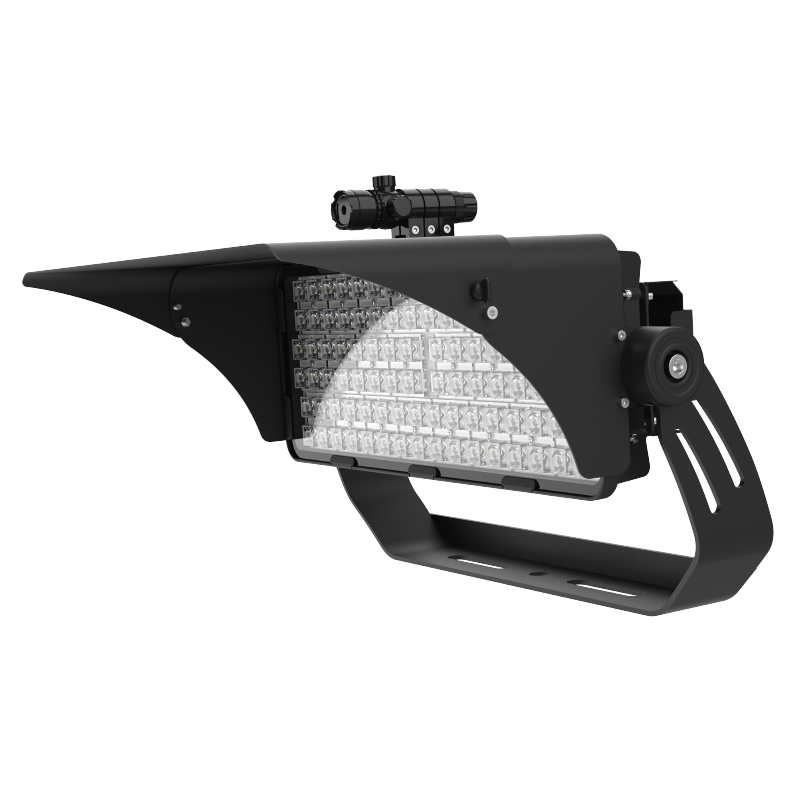
M8 800W