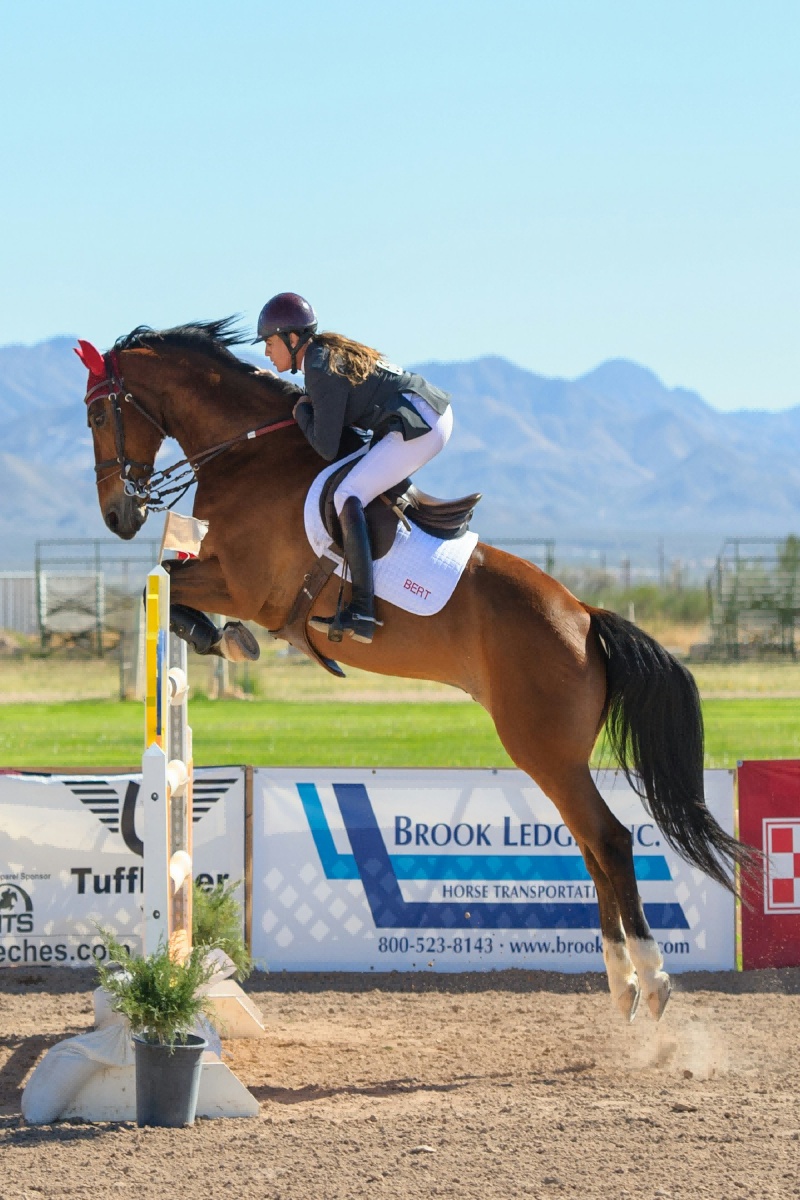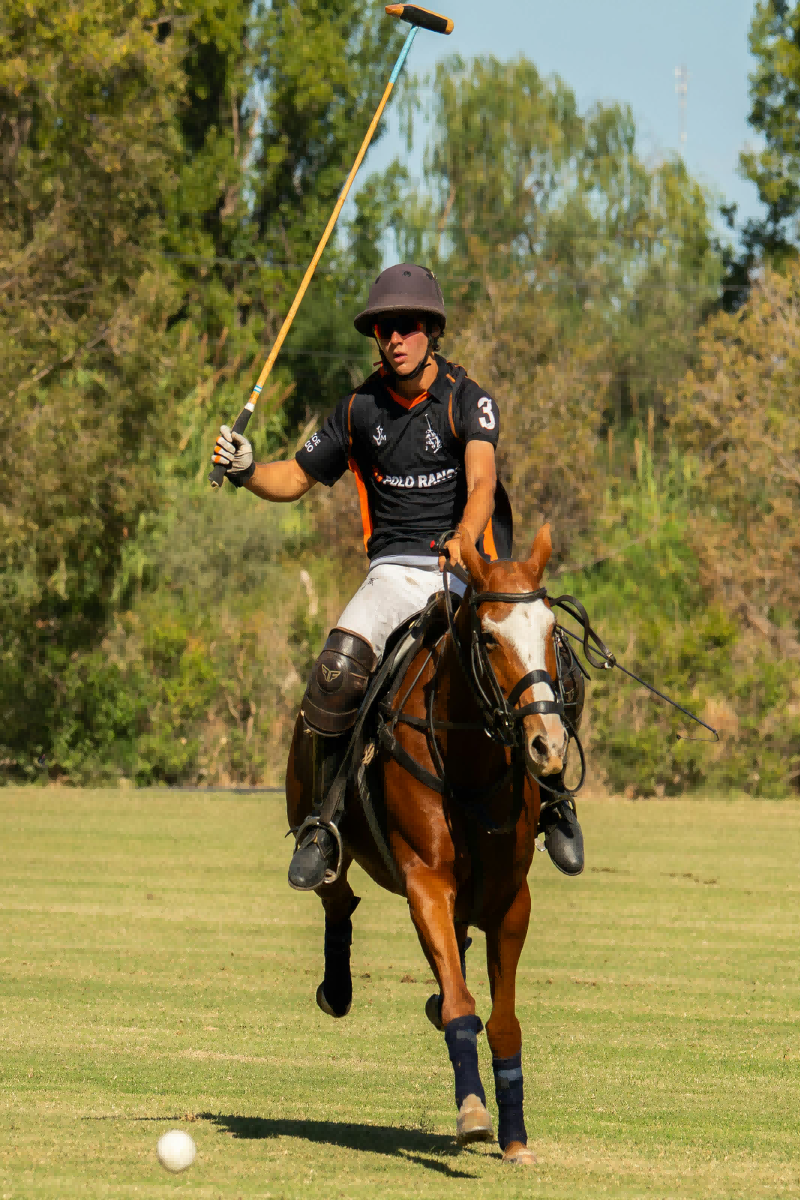
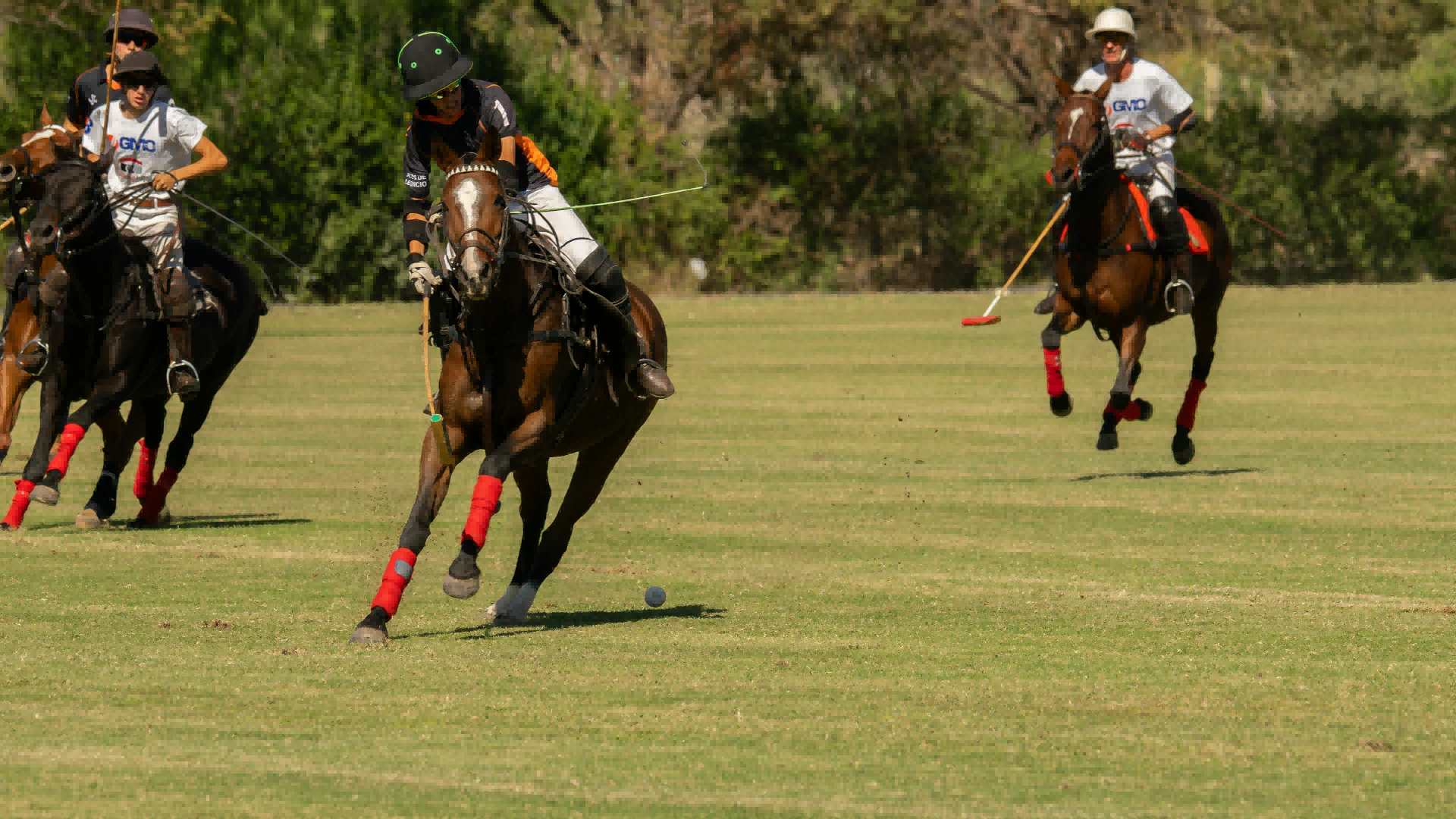
Polo is an ancient, fast-paced team sport played on horseback, often called the "Sport of Kings". Two teams of four riders use long-handled mallets to drive a small plastic or wooden ball into the opposing team's goal on a 300-yard grass field. The game emphasizes strategy, equestrian skill, and speed, with matches typically divided into 6 periods called "chukkas".

The polo field is a rectangular area, similar to football fields or rugby fields. The difference lies in the fact that athletes compete while mounted on horses, resulting in high speeds. Additionally, the ball used is quite small.
A standard outdoor polo field is 300 yards (274.3 meters) long by 160 yards (146.3 meters) wide, encompassing approximately 10 acres. The field is often referred to as the largest in organized sports, covering the area of roughly nine American football fields. Goal posts are set 8 yards (7.3 meters) apart.
Key Dimensions and Features:
Length: 300 yards (274.3 meters).
Width: 160 yards (146.3 meters).
Minimum Length: 229 meters (approx. 250 yards).
Goal Posts: 8 yards (7.3 meters) apart.
Safety Zone: It is recommended that a run-off area extends 9 meters (10 yards) beyond the boards/sidelines and 27.5 meters (30 yards) beyond the back line.
Side Boards: If boarded, the field is often 146m wide.

Polo field games are usually held during the day. Night polo games, often called "Polo in the Park" or "Polo Under the Lights," offer a unique, illuminated, and often more accessible, spectator-friendly experience, with notable venues like Empire Polo Club in California and Morven Park in Virginia hosting these evening matches. These events typically feature fast-paced, shorter matches (often in arenas) played under high-powered lights, sometimes accompanied by music, dining, and social, family-friendly atmospheres.
Regarding the lighting design standards for polo fields, the EN12193 and AS2560 does not provide detailed specifications, but these are outlined in the RP-6-22 American standards.
The following are the relevant regulations concerning polo fields in RP-6-22 :
| Area of play | Ehor Ave lux | Max CV | Uniformity Ratio |
| Class III | 750lx | 0.21 | 2.5:1 Max:Min |
| Class IV | 500lx | 0.25 | 3:1 Max:Min |
The blow figure is the pole placement suggested in RP-6-22 for a standard polo field :

Due to the size is much larger than the football pitch, so usually it used with 2-side 8-pole placement to ensure uniformity and targeted lux.
Below is an AGI32 simulation data for a polo field with 8 poles 33.5m height and a target 750lx.
However, in actual projects, we typically encounter light poles that are not as tall as 33.5 meters. Therefore, we will only arrange a simulated case based on the standard requirements.
Solution: Class III target average 750lx with 8 poles
Pole Qty: 8 poles
Pole Height: 33.5m
Average lux : 750lx
GR max: 50
Fixture Qty: 213 nos
Wattage: 1800W

The sports flood lights available on the market can generally be divided into two categories: one is retrofit 1-to-1 type, typically designed with a one-piece heat sink, and the other is modular designed type, typically from 300W to 600W per module.
The design concept of R5 is to replace traditional HID one-to-one when refurbishment, particular attention should be paid to weight and dimensions.
There are 2 models which is designed with a one-piece heat sink, just different shapes. R5 is round while M6 is rectangular in shape.
R5 has 3 different sizes: 600-800W, 800W-1200W, 1200W-1500W
M6 also has 3 different sizes: 750W, 1000-1200W, 1500W
If the heat sink is used ACD12 die-casting alloy, the size and weight would be substantial, far exceeding that of traditional metal halide lamps, if maintaining the same dimensions would result in worse heat dissipation. Therefore, we employ a more reliable solution, using AL1060 cold-forging alloy.
| Model | Wattage Range | Features |
| R5 | 600W~800W 800W~1200W 1200W~1500W | One-piece AL1060 Cold-forging heat sink with up to 237W/(m.K) standard thermal conductivity coefficient, which is double higher than ADC12 die-casting, which only has 96W/(m.K) |
| M6 | 750W 1000W~1200W 1500W | One-piece AL1060 Cold-forging heat sink with up to 237W/(m.K) standard thermal conductivity coefficient, which is double higher than ADC12 die-casting, which only has 96W/(m.K) |
There are a few modular designed Sports Flood lights in the market, from 300W to 600W per single module. Because it is more flexible and less tooling investments.
| Model | Wattage Range | Features |
| M5 | 500W single module | ADC12 Die-casting |
| M8 | 800W single module | ADC12 Die-casting |
| M4 | 600W single module | Body material: AL1060 Cold-forging, M4 has better heat dissipation abilities than M5 and M8, hence, M4 can be more compact under the same wattage comsuption which is very important for sports floodlights because of less EPA |
M5 is more economical than M8, while M4 has better heat dissipation management abilities due to AL1060 heat sink.
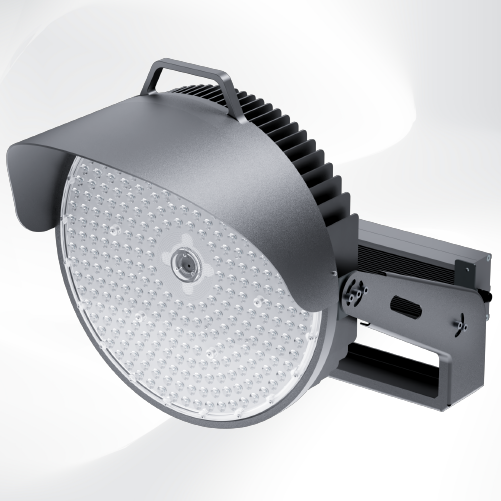
R5 1500W